



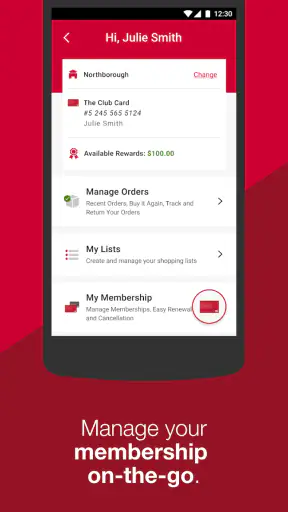
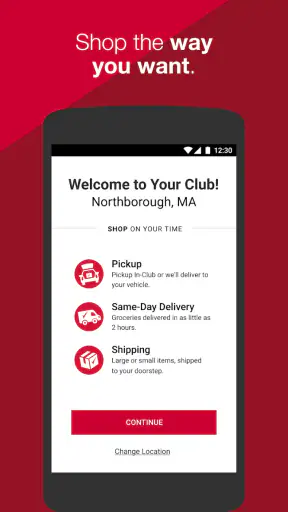
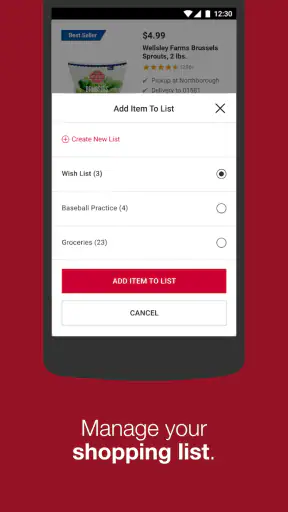
Shopping at a warehouse club often involves more than finding an item and paying for it. I may want to check whether my membership is ready, compare a package size, decide between a store visit and a delivery option, or remember what I planned to buy before entering a large club. BJ’s Wholesale Club brings those tasks into one mobile shopping app, and after using it, I found that its real value depends heavily on how well it fits into the moment I am shopping.
Developed by BJ's Wholesale Club, this free shopping app is aimed at members who want to manage more of the club experience from a phone. It has been available since October 21, 2017, and the current version is 15.9.0. On Android, it requires version 8.0 or later. The app is rated for Everyone, so it is presented as a general-purpose shopping tool rather than something restricted to adults.
What I like most is that the app can reduce the small bits of friction around a warehouse trip. It is not simply a digital product shelf. The useful question is whether it helps me make a better decision before I leave home, while I am walking through the club, and when I am trying to finish the purchase. That makes its dependence on a reliable connection especially important.
How the app behaves when shopping depends on a connection
Before leaving home, a connection makes planning practical
The strongest use case for me is preparation. At home, with a stable connection, I can browse BJ’s selection, think through household needs, and avoid arriving at the club with only a vague idea of what I want. That matters more at a warehouse club than at a small supermarket because package sizes, bulk quantities, and the physical scale of the store can make an unplanned visit feel inefficient.
I would use the app before a weekend stock-up rather than waiting until I am already in the parking lot. A quick look at products and membership-related tools can help me decide whether the trip is worthwhile. This is also where the app feels more comfortable than relying only on a mobile browser: a dedicated shopping app keeps the experience centered on BJ’s rather than making me move between unrelated tabs.
There is a practical trade-off, though. A connected app can show the most current shopping experience, but it also means that planning is best done while the phone has a dependable signal. I would not treat the app as a guaranteed substitute for preparation. If I know I will be entering a place with weak reception, I make my decisions before arriving instead of assuming every screen will load at the exact moment I need it.
Inside a club, convenience depends on timing
Using a shopping app inside a warehouse club sounds straightforward until the connection becomes inconsistent. A product page that loads quickly at home may take longer between tall aisles, near busy entrances, or in a crowded building. I found that the app is most useful in the club when I use it for a specific purpose, such as checking an item detail or confirming a shopping decision, rather than repeatedly refreshing pages while moving around.
My advice is to avoid turning the visit into a constant phone task. I prefer to make a short list of what I need, use the app to resolve questions, and then return my attention to the cart. This makes the app a supporting tool instead of another distraction. The connection matters, but so does the way I choose to use it.
A particularly useful habit is to open important screens before I reach the part of the trip where I expect to need them. This does not mean assuming the app works without a network connection. It simply reduces the number of moments when I am standing in an aisle waiting for a page to respond. The best experience comes from using connectivity proactively, not treating it as invisible.
Mobile shopping is helpful when the situation is messy
The app makes the most sense in everyday situations where shopping plans change. Imagine I am leaving work, realize that I need several household items, and decide to stop at BJ’s instead of going home first. I can use the app to organize my thoughts before entering the club, check the relevant shopping information, and keep the phone available for decisions that come up along the way.
It is also useful when shopping with another person. One person can focus on navigating the cart while the other checks the app, compares choices, or confirms what should be added. That shared workflow is more realistic than expecting one shopper to manage a long list, a phone, a cart, and children without interruption.
For a quick purchase, however, the app may feel like unnecessary overhead. If I already know exactly what I need and can find it immediately, opening an app adds another step. Its value grows with the complexity of the trip: a larger list, uncertainty about products, or a need to handle membership-related tasks makes the phone more useful.
Recovering when a page stalls or the network drops
Connectivity problems are not necessarily a reason to abandon the app, but they do change how I use it. If a screen stalls, I first check whether the phone has a usable connection rather than repeatedly tapping the same control. Moving to a different area, waiting briefly, or reopening the relevant part of the app can be more effective than trying to force several requests at once.
I also avoid making a critical decision based on a page that has only partly loaded. If I am checking a product detail, I want the complete information visible before I rely on it. If the app is slow, I would rather pause and verify the screen than assume that a missing section means the information is unavailable.
When the app recovers, I recommend checking the final state instead of assuming the previous action completed. This is especially important after any shopping action that appears to freeze. A second tap may repeat the action rather than fix it. The safer routine is to wait, return to the relevant area, and confirm what the app shows now.
This is one of the places where the app feels less forgiving than a paper list. A paper list never needs a signal, while the app can become temporarily less useful at precisely the moment I want to consult it. On the other hand, the app can bring together shopping and membership tasks in a way a handwritten note cannot. The trade-off is convenience in exchange for more dependence on the phone and network.
Using the app without wasting mobile data
For data-conscious shoppers, my approach is simple: do the browsing-heavy part at home or on another trusted connection, then use the app more selectively during the club visit. I do not need to keep opening the same product pages while walking through the store. Planning ahead reduces both waiting and unnecessary mobile use.
It also helps to keep the app focused on the trip at hand. Browsing every possible category while away from home is less efficient than deciding what I need first and checking only the relevant items. This is not a limitation unique to BJ’s, but the warehouse format makes focused planning particularly valuable because bulk purchases can quickly become expensive or difficult to carry.
I would also keep the phone charged before a major shopping trip. A low battery and a weak connection create two separate problems, and together they can make a digital shopping workflow unreliable. The app cannot replace basic preparation, especially when I expect to use it for membership access or several product checks.
What the app does well for BJ’s members
The app’s main strength is concentration. Instead of treating the club as only a physical destination, it gives me a mobile starting point for the visit. That is helpful for people who shop at BJ’s regularly and want a more organized routine around recurring household purchases.
Its audience is clear: members who want smart, convenient ways to get more from their membership. I would recommend it to someone who makes planned warehouse trips, likes checking details before shopping, or wants club-related tasks available from a phone. The average rating of 4.6 from around 189 thousand ratings suggests that many shoppers find the overall experience worthwhile, while more than 5 million installs show that it has reached a substantial mobile audience.
The app is free, which removes the cost barrier to trying it. That does not mean every shopper will benefit equally. A person who rarely visits BJ’s, dislikes using a phone while shopping, or has unreliable connectivity may get less from it than a regular member who plans purchases digitally.
Where it compares with ordinary alternatives
The usual alternatives are a mobile browser, a handwritten list, or simply walking into the club without planning. Each has a different advantage. A handwritten list is dependable and quick, but it cannot provide the app’s connected shopping context. A browser can be useful without installing another app, but it may feel less direct when I am moving between shopping and membership-related tasks.
Going without any digital tool is still perfectly reasonable for a familiar, short trip. In fact, I prefer that approach when I need only one known item and do not expect any decisions. BJ’s Wholesale Club becomes more compelling when the trip involves several products, changing plans, or a desire to prepare before arriving.
The app is not automatically better than every alternative. It is better when its connected tools solve a real problem. If my main concern is avoiding network dependence, a written list wins. If my goal is to make a larger membership trip more deliberate, the app has the advantage because it keeps the planning process tied to BJ’s rather than splitting it across unrelated tools.
Small workflows that make a noticeable difference
I found three habits especially useful. First, I plan the broad outline of the trip while connected at home. That means deciding which categories matter and identifying questions I need answered before I walk into the club. This reduces the temptation to browse aimlessly in a location where loading may be slower.
Second, I use the app as a decision tool rather than a permanent screen. I consult it when I need product information or a membership-related action, then put the phone away. This keeps the shopping trip moving and avoids the frustration of staring at a loading page while the cart is blocking an aisle.
Third, after any slow or interrupted action, I verify the result from the current screen. This is a small step, but it prevents the common mistake of repeating an action because the first attempt looked unresponsive. It is particularly valuable when the phone shifts between Wi-Fi and mobile connectivity.
These habits do not create offline functionality, and I would not assume that an already opened screen will remain fully usable after the connection disappears. They simply make the connected experience more predictable. The app works best when I acknowledge its network needs instead of pretending they do not exist.
Who should install it, and who can skip it
I would install it if I were a regular BJ’s member who shops for a household, makes larger trips, or wants to handle club-related planning from a phone. It is also a good fit for someone who likes checking information before committing to a trip. The free price makes testing it low-risk, and the Everyone rating means it is positioned for broad household use.
I would skip it if I visited BJ’s only occasionally and already had a routine that worked. I would also hesitate if my phone connection was unreliable inside the places where I shop, because the app’s usefulness can shrink when screens cannot load at the right time. In that situation, a paper list or notes app may be a more dependable companion, with the BJ’s app reserved for planning at home.
Shoppers who want a completely offline-first experience should be realistic about the trade-off. This is a connected shopping app, not a replacement for every physical or manual part of the warehouse visit. Its purpose is to make membership and shopping tasks easier through the phone, so the phone’s battery, signal, and attention all become part of the experience.
My final view of the connected shopping experience
After using BJ’s Wholesale Club, I see it as most valuable before and around a planned club visit. It helps turn a broad warehouse trip into something more organized, especially when I need to think through several purchases or membership-related details. The app is less impressive as a tool for constant aisle-by-aisle browsing, where connection quality and phone handling can get in the way.
The central question is not whether the app has enough features to replace every other shopping method. It is whether connected access makes my BJ’s routine easier. For regular members, the answer is often yes, provided they prepare important information while connected and keep a backup plan for weak service. For occasional shoppers, the benefit may not justify changing an established routine.
My recommendation is therefore practical rather than unconditional: try it if BJ’s is part of your normal shopping pattern, but use it with a little planning. Open the app before leaving, keep the trip focused, verify actions after interruptions, and do not depend on a signal that may disappear inside the club. With those expectations, BJ’s Wholesale Club is a useful free companion for members who want their phone to make warehouse shopping more manageable, not a magic solution for every shopping situation.


